Skip to content
KWKyoto WayfinderAn independent Kyoto travel guide
Back to History Stories

Independent place histories

Nijo Castle: Power in Rooms and Floors

A castle where political authority was staged through gates, painted rooms and sound.

Official name
元離宮二条城
Place type
Castle and palace complex
Established / formed
Built from 1601; Ninomaru Palace was completed in 1626.

01

The history of this place

Nijo Castle was built by Tokugawa Ieyasu as a base in Kyoto and as a stage for shogunal authority. Its power is expressed through sequence: the formal gate, controlled movement, increasingly important rooms and carefully placed paintings. The castle later became a place where the end of the shogunate was announced, giving the same rooms a second political meaning. Read the building as a choreography of access, rank and visibility.

02

A suggested visit order

  1. 01East Gate
  2. 02Karamon Gate
  3. 03Ninomaru Palace
  4. 04Shikidai Reception Room
  5. 05Grand Hall
  6. 06Kuro-shoin
  7. 07Shiro-shoin
  8. 08Nightingale Floors
  9. 09Ninomaru Garden
  10. 10Honmaru Area
  11. 11Honmaru Palace
  12. 12Castle Tower Site
  13. 13Moats and Stone Walls

03

What to See Inside

A residence designed to be read

01What to See Inside

01

East Gate

Higashi Ote-mon

Place type

The main entrance where movement into the castle was controlled.

The history of this place

The gate's scale and layered defensive form express the castle's official character rather than a private residence.

What to notice

  • Notice the depth of the gate passage.
  • Look for lines of sight across the approach.
  • Imagine arrivals being observed and announced.

On-location guide

The first lesson of the castle is control. Every visitor enters through a designed sequence, not an open garden path.

02What to See Inside

02

Karamon Gate

Karamon

Place type

A richly decorated gate between the outer grounds and palace area.

The history of this place

Its ornament signals that the visitor is moving from defense into ceremony and formal reception.

What to notice

  • Study the layered carvings and white-and-gold contrast.
  • Notice how the gate frames the palace beyond.
  • Look up before walking through.

On-location guide

The gate is a change of register: from military threshold to political theater.

03

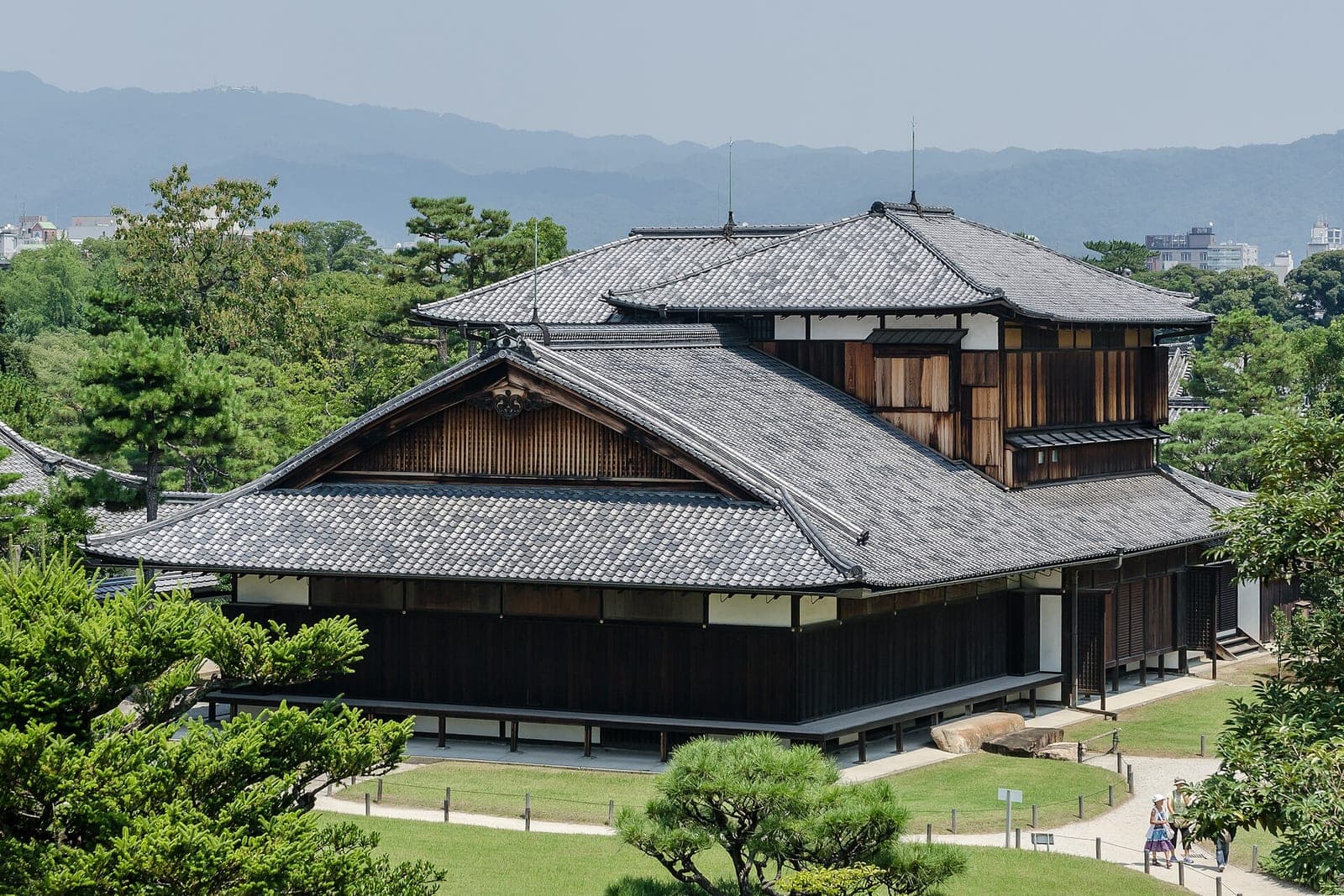
Ninomaru Palace

Ninomaru-goten

Place type

A sequence of reception rooms with painted walls and ceilings.

The history of this place

The rooms were arranged by rank. The shogun's position, the visitor's path and the painted subjects all communicated hierarchy.

What to notice

  • Compare room size and decorative detail.
  • Notice the animals and plants in the paintings.
  • Move slowly because the sequence matters.

On-location guide

Do not treat the palace as a collection of separate rooms. Its history is in the order in which you are allowed to see them.

04What to See Inside

04

Shikidai Reception Room

Shikidai

Place type

An official reception space within the palace sequence.

The history of this place

The room's position helped distinguish formal reception from the private and more restricted rooms deeper inside.

What to notice

  • Notice the change in room scale.
  • Look for painted surfaces and thresholds.
  • Follow the one-way visitor route.

On-location guide

The palace communicates rank by moving you from one kind of room to another. This is the first clear change after the main reception sequence.

05What to See Inside

05

Grand Hall

Ohiroma

Place type

The principal formal hall for high-level audiences.

The history of this place

The hall made political hierarchy visible through position, distance and the arrangement of the audience space.

What to notice

  • Read the room from the center axis.
  • Notice the relation between floor level and rank.
  • Look at the painted panels without touching the rails.

On-location guide

This room is political theater in built form. The arrangement tells you who could speak, stand and be seen.

06What to See Inside

06

Kuro-shoin

Kuro-shoin

Place type

A more private reception space for closer audiences.

The history of this place

The change from grand public rooms to a smaller interior reveals how the palace separated official display from private counsel.

What to notice

  • Compare the decoration with the Grand Hall.
  • Notice the lower-key atmosphere.
  • Keep the flow moving through the rooms.

On-location guide

The palace becomes quieter as access narrows. Architecture here turns from public authority to controlled conversation.

07What to See Inside

07

Shiro-shoin

Shiro-shoin

Place type

The most private section of the Ninomaru Palace route.

The history of this place

Its position at the end of the sequence reflects the increasing privacy and status of the rooms within the shogunal residence.

What to notice

  • Notice the shift toward domestic scale.
  • Look for views toward the garden.
  • Observe the room boundary from the corridor.

On-location guide

The final rooms show that power was not only displayed. It was also protected through distance, privacy and carefully limited access.

08What to See Inside

08

Nightingale Floors

Uguisubari

Place type

Floorboards that make a soft chirping sound underfoot.

The history of this place

The sound was an early security device, turning footsteps into an audible signal inside the residence.

What to notice

  • Walk at a natural pace and listen.
  • Notice how sound changes with the room.
  • Avoid testing the floor loudly.

On-location guide

Here, architecture carries a message. The floor tells the household that someone is moving before the visitor is seen.

09What to See Inside

09

Ninomaru Garden

Ninomaru Teien

Place type

A garden arranged as a formal view from the palace rooms.

The history of this place

The garden's stones, islands and borrowed landscape were composed for ceremonial observation and changing seasonal views.

What to notice

  • Look from the building before walking the path.
  • Notice the balance of stone, water and clipped trees.
  • Observe the garden as a framed scene.

On-location guide

The garden is not only for walking. First read it from the palace, as a designed image of order.

10What to See Inside

10

Honmaru Area

Honmaru

Place type

The inner compound with a later palace and elevated ground.

The history of this place

The inner compound was reshaped after fire and later use, showing how the site continued to change beyond its first political purpose.

What to notice

  • Notice the difference from Ninomaru.
  • Look across the moat and walls.
  • Keep the later layers in mind.

On-location guide

A historic site can hold several eras at once. The Honmaru helps you see the castle as a changing institution.

11What to See Inside

11

Honmaru Palace

Honmaru Goten

Place type

The later palace within the inner compound.

The history of this place

The palace represents a later layer of the site and is subject to changing access and opening arrangements.

What to notice

  • Check current opening information.
  • Notice the different period and scale.
  • Do not enter closed areas.

On-location guide

The Honmaru Palace keeps the castle from becoming a single-period story. It shows how the site continued to serve new political and ceremonial roles.

12What to See Inside

12

Castle Tower Site

Tenshu-dai

Place type

The elevated site where the castle tower once stood.

The history of this place

The remaining base makes absence visible: the castle's defensive skyline changed even as the wider compound survived.

What to notice

  • Look over the surrounding walls.
  • Notice the change in elevation.
  • Use the viewpoint without blocking the path.

On-location guide

A ruin can be a historical document. The empty tower site helps you imagine how the castle once announced itself above Kyoto.

13What to See Inside

13

Moats and Stone Walls

Hori and Ishigaki

Place type

The defensive landscape that gives the castle its structure.

The history of this place

Moats, walls and controlled gates made the castle legible as a protected seat of authority even within the city.

What to notice

  • Read the stonework in changing light.
  • Notice how water slows movement.
  • Compare public and restricted edges.

On-location guide

The castle's history is also outside the rooms. Its walls explain how authority occupied space in the city.

Official sources