Skip to content
KWKyoto WayfinderAn independent Kyoto travel guide
Back to History Stories

Independent place histories

Arashiyama: Landscape Made for Viewing

A cultural landscape where river, mountain, seasonal color and leisure meet.

Official name
嵐山
Place type
Historic cultural landscape
Established / formed
A courtly pleasure landscape by the Heian period.

01

The history of this place

Arashiyama became a place for seasonal outings during the Heian period, when court culture valued carefully composed landscapes. Later religious buildings, bridges and walking paths gave the area new layers of use. Its history is not only in one monument but in the habit of moving through water, trees and mountain views. A slower visit reveals how the landscape has been framed, borrowed and revisited across centuries.

02

A suggested visit order

  1. 01River Landscape
  2. 02Togetsukyo Bridge
  3. 03Bamboo Grove
  4. 04Mountain View

03

What to See Inside

A landscape with a long audience

01What to See Inside

01

River Landscape

Katsura-gawa

Place type

The waterway that gives the area its broadest sense of scale.

The history of this place

The river has long supported transport, seasonal outings and the visual identity of the landscape.

What to notice

  • Look across the water to the mountain profile.
  • Notice how the river changes the pace of walking.
  • Watch for seasonal reflections.

On-location guide

Begin with the river because it explains the scale of Arashiyama better than a close-up view.

02What to See Inside

02

Togetsukyo Bridge

Togetsukyo

Place type

A bridge that turns the river into a framed view.

The history of this place

The bridge has been rebuilt many times, but its role as a crossing and viewpoint has remained central.

What to notice

  • Observe the bridge line against the mountain.
  • Notice the changing current below.
  • Avoid treating the crossing as a photo stop only.

On-location guide

The bridge is a moving viewpoint. The scene changes with every step, so keep walking before choosing one frame.

03

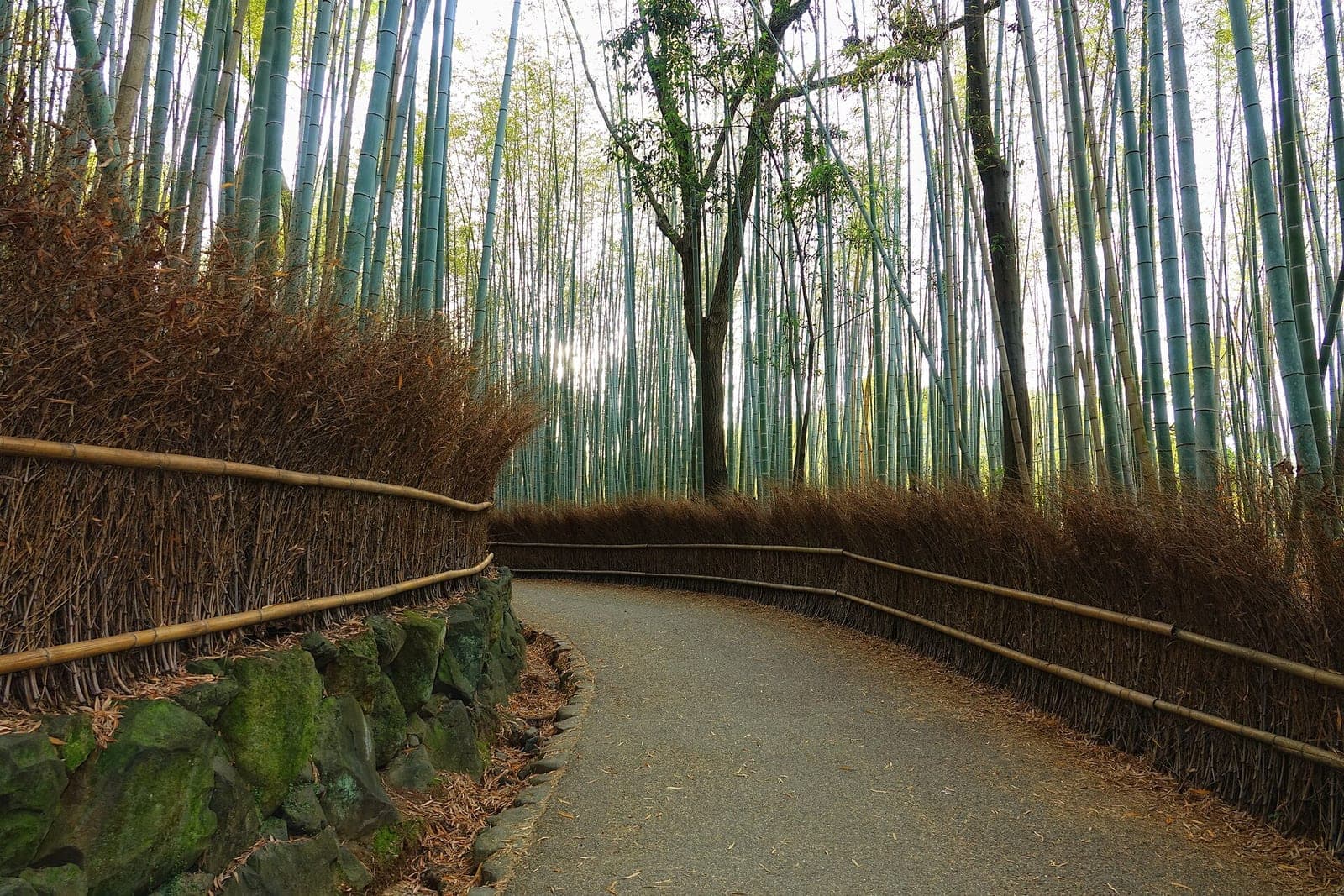
Bamboo Grove

Chikurin

Place type

A narrow path through a cultivated bamboo landscape.

The history of this place

Bamboo has been used in Kyoto for building, craft and garden design. The grove is a managed cultural landscape, not untouched wilderness.

What to notice

  • Look at the height and repeated rhythm of the culms.
  • Keep to the path and protect the living grove.
  • Listen for wind through the leaves.

On-location guide

The quiet here comes from restraint. Stay on the path, keep voices low and let the sound of bamboo carry the scene.

04What to See Inside

04

Mountain View

Arashiyama

Place type

The wooded slope that makes the riverfront feel like a landscape painting.

The history of this place

The mountain has served as a borrowed backdrop for gardens, poetry and seasonal viewing for centuries.

What to notice

  • Compare the slope in different seasons.
  • Notice how buildings are kept low near the river.
  • Look for layers rather than a single object.

On-location guide

The mountain is the constant subject. The rest of the visit is a set of ways to approach it.

Official sources